
- News
- Sports News
- Cricket News
- Justice Lodha urges state associations to be transparent
Trending
This story is from February 7, 2017
Justice Lodha urges state associations to be transparent
Former Chief Justice RM Lodha has said that state cricket associations could take a big step towards transparency by making public the revenue earned from sale of tickets and allotment of complimentary passes.
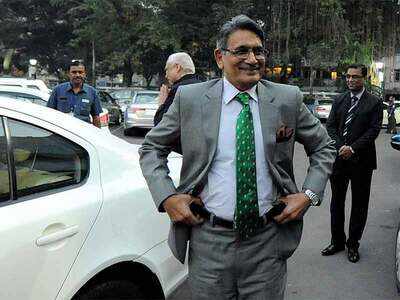
BENGALURU: Former Chief Justice RM Lodha has said that state cricket associations could take a big step towards transparency by making public the revenue earned from sale of tickets and allotment of complimentary passes.
Dubbing the culture of passes as an “easy method to oblige people who matter“, Lodha observed that while eradicating this practice ought to be the goal of every state association, revealing the true picture about distribution of tickets and passes on its website will signal a “good beginning“ towards a transparent administration.
“Let us remember that complimentary passes reduce the availability of tickets to the public and revenue from their sale. It instead goes to friends, government department and others. A lot of them get these free passes.There is no account of where these go, no disclosures and facts are not brought to public domain,“ Lodha told TOI.
“With RTI not being applicable here, associations must take the initiative to inform the public about distribution of passes, the categories of people who got them and revenues from ticket sales,” Lodha said.
Chinnaswamy stadium has a capacity of around 32,000 but for the recent T20 match between India and England, a little over 15,000 tickets were sold online and over the counter. The rest apparently went as tickets or complimentaries to members, clubs and others.
“We all know that complimentary passes are a largesse by the cricket association concerned, given as entitlement to certain sections of society . Our committee has mentioned in its report that this has to be prevented and steps must be taken to ensure that tickets to cricket matches are widely available to the public at reasonable rates.“ Lodha also pointed to the questions his committee had raised to BCCI: “What is the basis of free tickets and passes being given for games? What proportions of tickets are available to the general public and how is that transparently ensured? What is the policy for giving tickets and passes to governmental and statutory authorities? We have also specified that the ombudsman must redress grievances of the public concerning ticketing.”
Dubbing the culture of passes as an “easy method to oblige people who matter“, Lodha observed that while eradicating this practice ought to be the goal of every state association, revealing the true picture about distribution of tickets and passes on its website will signal a “good beginning“ towards a transparent administration.
“Let us remember that complimentary passes reduce the availability of tickets to the public and revenue from their sale. It instead goes to friends, government department and others. A lot of them get these free passes.There is no account of where these go, no disclosures and facts are not brought to public domain,“ Lodha told TOI.
“With RTI not being applicable here, associations must take the initiative to inform the public about distribution of passes, the categories of people who got them and revenues from ticket sales,” Lodha said.
Chinnaswamy stadium has a capacity of around 32,000 but for the recent T20 match between India and England, a little over 15,000 tickets were sold online and over the counter. The rest apparently went as tickets or complimentaries to members, clubs and others.
“We all know that complimentary passes are a largesse by the cricket association concerned, given as entitlement to certain sections of society . Our committee has mentioned in its report that this has to be prevented and steps must be taken to ensure that tickets to cricket matches are widely available to the public at reasonable rates.“ Lodha also pointed to the questions his committee had raised to BCCI: “What is the basis of free tickets and passes being given for games? What proportions of tickets are available to the general public and how is that transparently ensured? What is the policy for giving tickets and passes to governmental and statutory authorities? We have also specified that the ombudsman must redress grievances of the public concerning ticketing.”
End of Article
FOLLOW US ON SOCIAL MEDIA
Visual Stories




Top Sports News
TOP TRENDING
Trending Stories
In Sports
Entire Website
- Watch: In an heart-warming video, Rishabh Pant seen praying to his bat, gloves and helmet
- How playful Rishabh Pant forced Shubman Gill to say, 'Bro, calm down'
- India virtually seal historic gold at Chess Olympiad in Open section
- Rohit Sharma's response to Mohammed Siraj's 'spin' offer leaves teammates in splits
- Rishabh Pant reminds everyone why he is special
- Virat Kohli spotted chatting with Richard Kettleborough after umpire's reaction to his dismissal goes viral
- Daniel Dubois knocks out Anthony Joshua to retain IBF world heavyweight title
- 'There are two batters in India...': Former Pakistan player lavishes praise on Rishabh Pant
- 1st Test Live: Ashwin gets rid of Shadman
- Shubman Gill becomes only the second India batter after Rahul Dravid to score...
- 'Quad is here to stay,' says PM Modi as India prepares to host 2025 summit
- 'Strikes will continue & ...': Israel after Hezbollah's rocket attack
- How Israel killed most wanted terrorist with a phone call in 1996
- PM Modi attends 6th Quad summit in US hosted by Biden: Key takeaways
- 1st Test Live: Ashwin' five-wicket haul leaves Bangladesh reeling
- Struggling Virat Kohli advised to 'move with the times'
- There is a speed bump in bulldozer raj’s way
- How India prices of iPhone 16 compare with US, Canada, Singapore, Dubai
- 'All bullets & ...': Bengal man duped into joining Ukraine war returns
- At least 19 killed in coal mine blast in Iran's Tabas

Popular Categories
Hot on the Web
Top Trends
Trending Topics
Daughter's Day WishesDaughter's Day 2024 WishesAbdu RozikMukesh KhannaJayamSana Khan HusbandTirupati Laddoo ControversyGOAT CollectionVaazha OTT ReviewKozhipannai Chelladurai ReviewCheetahsKangana RanautAditi Rao HydariDalljiet KaurHoliday DestinationVikas SethiBest Selling Earbuds Under 1000Apple iPhone 16 ProVirat KohliWordle Answer
Living and entertainment
Latest News
Delhi CM’s statement highlights loyalty dilemma in Indian partiesHrithik Roshan SPOTTED filming intense action sequences for 'WAR 2' in Italy - WATCHKarnataka CM Siddaramaiah warns of legal action against those spreading fake newsThe truth about sugar substitutes: Safe alternative or hidden health risk?Lucky numbers for September 22 to September 28: Your weekly fortunate number revealedUP: Muslim 'healer' arrested for sexually assaulting teen girlMalaysian police arrest hundreds in child abuse probeAryan Khan or dad Shah Rukh Khan, who wore this lather jacket better?No rain likely for three days, temperature to go up; AQI turns worse in DelhiTapCoin daily bounty cards for September 22, 2024: Earn tokens, exclusive rewards and more'Trump made Robinson...': Harris' campaign aims to shift voters in NC amid scandalGemini, Daily Horoscope Today, September 22, 2024: Be mindful of diet and mental well-beingPalanpur tea seller's son gets into IIM RanchiUP couple sleeping on roadside crushed to death by reversing carTyreek Hill's Net Worth 2024, Current Salary, Personal Life and MorePankit Thakker: Playing Akash in the film Maaya Ka Moh was a transformative experienceAndhra Deputy CM Pawan Kalyan to undertake 11-day penance to propitiate Lord Venkateswara'Hiding among civilians': Israel reveals how IDF eliminated top Hezbollah commander
Copyright © 2024 Bennett, Coleman & Co. Ltd. All rights reserved. For reprint rights: Times Syndication Service